ChatGPT Style Analysis: The Viral Color, Hair & Makeup Trend
Late-April 2026 a ChatGPT prompt for personal color analysis hit 64K likes. Three sentences, one photo, a magazine-grade graphic. Here is how the trend works, why GPT Image 2 nails it, and the one-tap app we built around it.
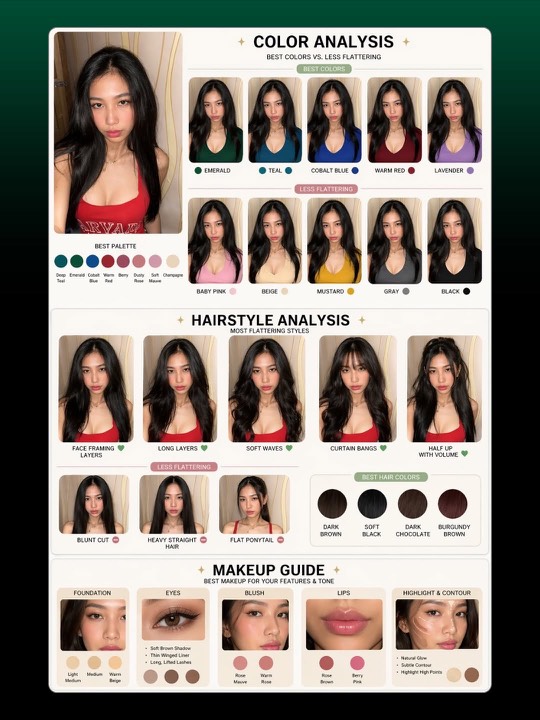
Open Instagram this week and you'll see them everywhere. Someone's holding up what looks like a glossy salon brochure — twelve clothing colors side by side under their face, half marked with green checks, half with red Xs. Your friend posts theirs the next day, labeled "SOFT SUMMER" with a recommended palette of dusty teals and rose mauves. By Thursday some guy you barely know shares his "DEEP AUTUMN" card with a polo-shirt color grid and three suggested haircuts.
These aren't from a $300 colorist appointment. They're from ChatGPT.
The trend, in one sentence
In late April 2026, a post from @chatgptricks racked up 64,000 likes by showing what happens when you upload a portrait to ChatGPT's new image model and ask for a personal color, hair, or makeup analysis as a designed graphic. Three short prompts, three minutes, and you get back something that looks indistinguishable from a magazine style report.
The original viral push came from creators like @deebahalil on Threads and @charliehills with the "diagram-first" variant. By early May the same screenshots were circulating on Pinterest, TikTok, and Filipino beauty blogs as a DIY alternative to professional color analysis.
The trick? The prompts are surprisingly specific. They tell the model to be visual-first, use side-by-side comparisons, and skip paragraphs in favor of short labels. The model does the rest.
Why it actually looks real
Two reasons.
First, the model. This is GPT Image 2, OpenAI's late-April 2026 release, which is genuinely good at rendering typography and designed layouts. Earlier image models could draw a face but turned text into illegible noise. GPT Image 2 reads instructions like "best colors" and "less flattering" and reliably renders them as clean labels under each face crop.
Second, the prompt craft. "Visual-first, with short labels only and no paragraphs" is the magic line. It forces the model into a designer mindset rather than a documentary one. The same prompt without that phrase gives you blocky walls of text. With it, you get something that could pass for a Vogue infographic.
Why the trend resonates
A real seasonal color consultation runs $150 to $300 and takes an hour. People have wanted this kind of guidance for decades — there's a reason "What Color Am I" books from the 80s still sell. But the cost kept it out of reach for most people.
GPT Image 2 doesn't replace a trained colorist. The model can be wrong about your undertone if your photo's poorly lit. It might suggest a hairstyle that suits your bone structure but not your hair texture. The output's best treated as a starting point, not gospel.
But for a few cents per generation, it's a starting point worth having. And honestly, the side-by-side format is its own reward. You learn more about what colors do to your face from seeing twelve options at once than from any verbal explanation.
Make your own
We built Style Analysis on AI Pass so you don't have to copy-paste the three prompts circulating online, or wonder whether you got the prompt right.
Upload one portrait, pick which report you want (color, hair, makeup, or all three), pick a visual style (clean diagram, editorial magazine, Pinterest mood, clinical card), and generate. The app uses GPT Image 2 by default — the same model the viral posts use, because nothing else renders the labels and layouts this cleanly.
Every new account gets free credits to try it. After that, each report costs a few cents. No subscription.
Try it: https://aipass.one/spaces/aipass/style-analysis
Quick tips for best results
- Use a natural-light photo facing the camera. The model reads undertones from skin lighting, so harsh fluorescents or Instagram filters will throw it off.
- Wear something simple and neutral. A bright red shirt biases the color analysis toward warm palettes.
- Generate two or three styles and compare. The Editorial Magazine and Pinterest Mood layouts often surface different suggestions than the Clean Diagram default.
Why single-purpose tools beat general chatbots
You can absolutely run these three prompts yourself in ChatGPT. The viral posts include them in plain text. But there's real friction in switching contexts, copying the prompts in the right order, and re-uploading the photo each time. A purpose-built app that knows the trend, picks the right model, and gives you a structured style picker turns a five-minute process into a fifteen-second one. That's the bet behind every app in the AI Pass space catalog — the model's a commodity, the experience around it isn't.